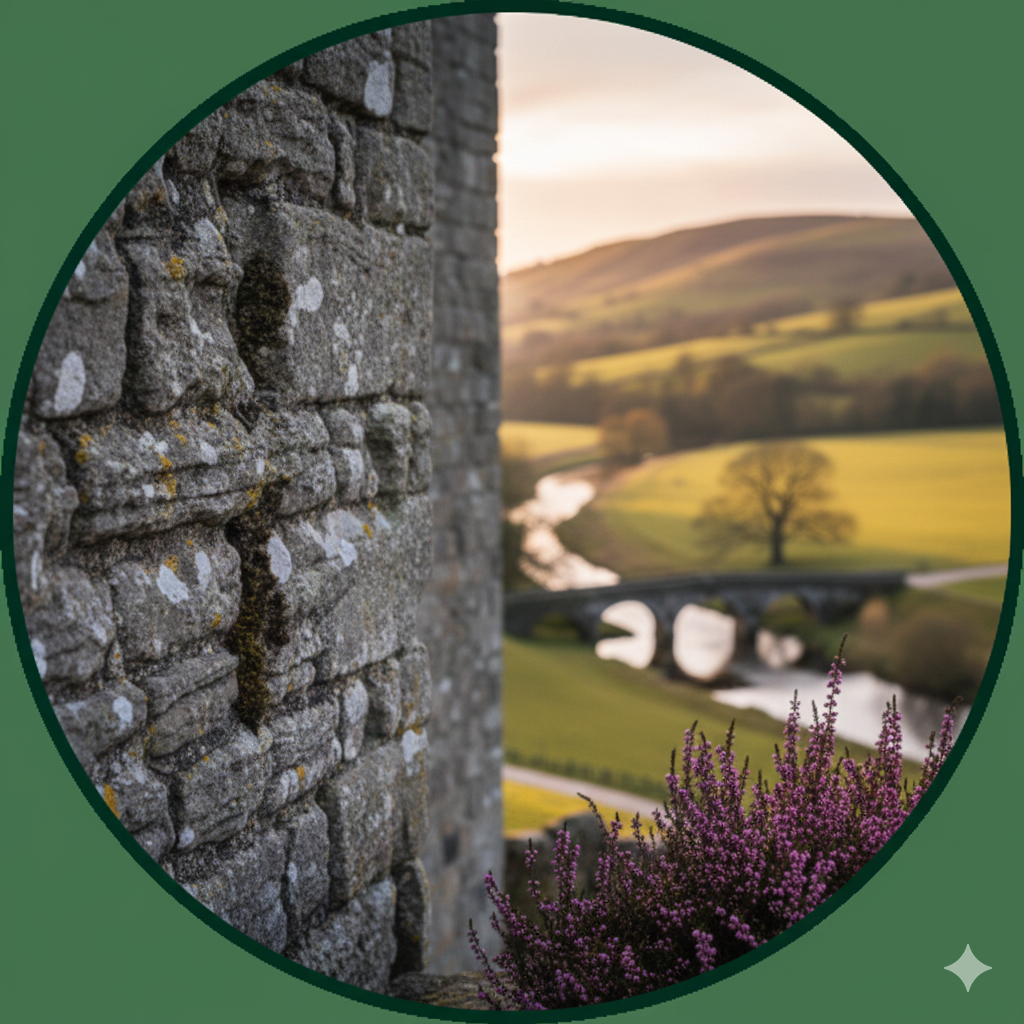
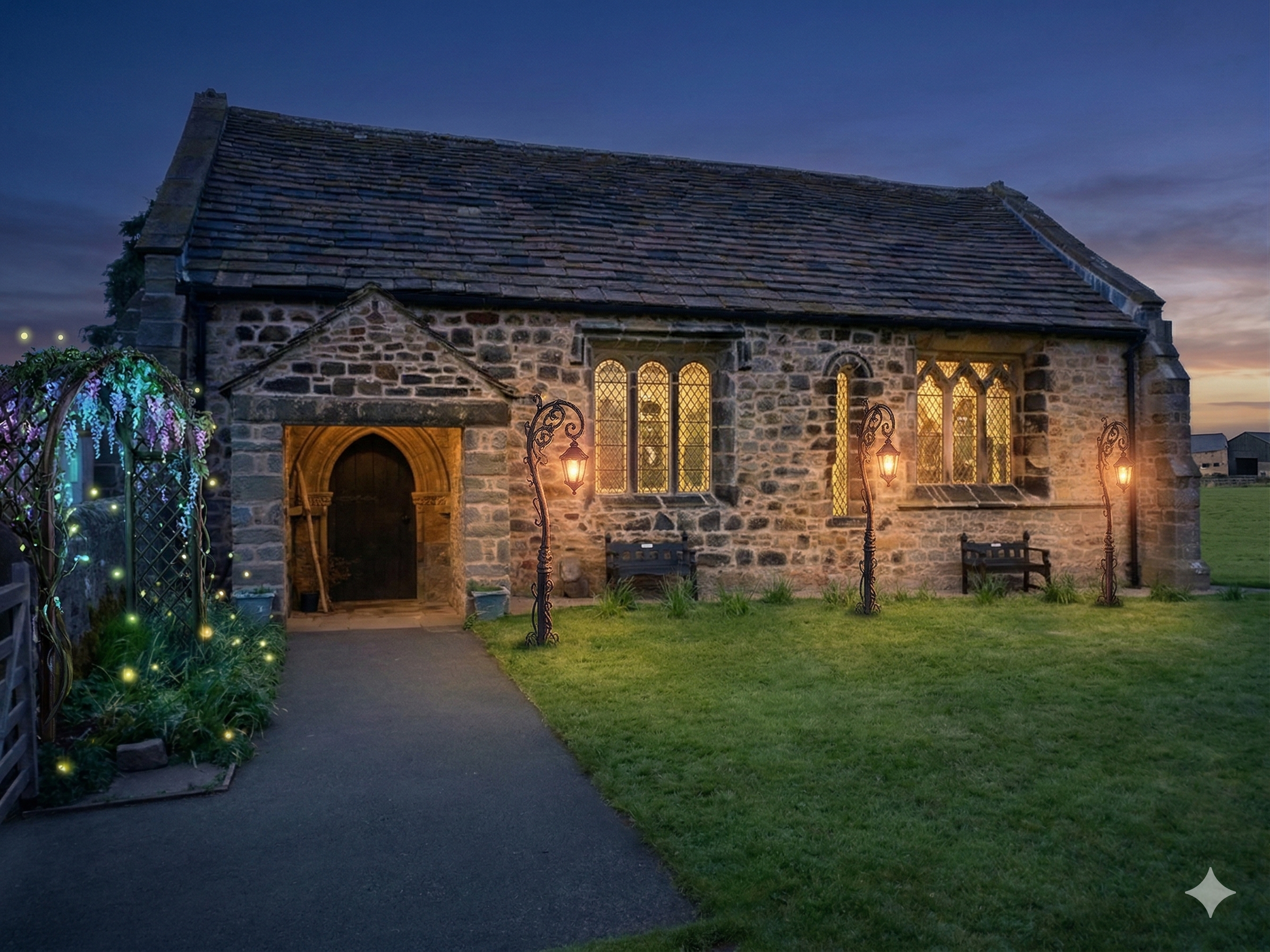
Just a half-mile drift from the Roman echoes of Ribchester lies a place where the clocks seem to have stopped in the 12th century.
There are no brown tourist signs beckoning you to St. Saviour’s Church at Stydd; there is no gift shop or gravel car park.
Instead, there is a narrow, leafy lane, a handful of ancient almshouses, and a small sandstone building that feels less like a monument and more like a secret kept by the Ribble Valley.
A Legacy of the Hospitallers
To understand Stydd, you have to look beyond the stone. In the mid-1200s, this land was acquired by the Knights Hospitaller—the medieval military order dedicated to caring for the sick and protecting pilgrims. What remains today is the chapel of their ancient “hospital.”
In the medieval sense, a hospital wasn’t just for the infirm; it was a sanctuary of hospitality.
Standing before the north wall, you can still see the original Norman craftsmanship: two narrow, round-headed windows and a doorway decorated with a hauntingly simple dog-tooth zig-zag pattern.
Tangible Echoes of the Past
Stepping through the south porch is like stepping into a cold, quiet pocket of the 1300s.
The interior is refreshingly primitive. There is no soaring vaulting here—just simple tie-beam trusses and the smell of damp stone and beeswax.
- The Rustic Font: Keep an eye out for the octagonal gritstone font. It wasn’t carved by a master mason from the city, but by a local country craftsman. Its “naive” style is incredibly moving; it’s a piece of folk art that has survived centuries of reform and revolution.
- The Stone Coffin: Near the altar lies an empty stone coffin of “great antiquity.” Its original occupant is long forgotten, but it serves as a stark, tactile reminder of the generations of pilgrims who sought solace under this roof.
- The Exterior “Chessboard”: Before you leave, walk around to the south side. Near the base of the walls, look for the unusual carvings in the stone—patterns that look like stars and chessboards. Their meaning remains a mystery, a silent riddle left by the masons.
Expanding the Pilgrimage: From Romans to Ribeye
A trip to Stydd is best served as part of a wider exploration of Ribchester, a village built literally upon the foundations of the Roman fort Bremetennacum.
To truly appreciate the layers of history, start your morning at the Ribchester Roman Museum. Here, you can stand over the exposed remains of the granaries and see the famous (though replica) Ribchester Helmet, which hints at the prestige this cavalry outpost once held.
Where to Refuel and Retreat
After soaking up the Roman history, the walk to Stydd provides the perfect “palette cleanser.”
- The Glasshouse at Stydd: Located just a stone’s throw from the church, this is one of the most atmospheric spots in Lancashire. It’s a literal glasshouse filled with vines and greenery, offering a sophisticated, Mediterranean-inspired menu. It’s the perfect spot for a long lunch or a refined afternoon tea while looking out over the nursery gardens.
- The Ribchester Arms: For those seeking a more traditional, “roaring fire” experience, this historic coaching inn in the heart of the village is essential. Known for its generous portions of local Ribble Valley beef and a stellar selection of ales, it’s the ideal place to rest your boots after a day of exploring.
- Staying Over: If you can’t bear to leave the quiet of the valley, the Ribchester Arms also offers high-quality guest rooms, allowing you to wake up to the sound of the Ribble and have the Roman ruins to yourself before the day-trippers arrive.
Your Visitor’s Guide to Stydd
Stydd is a “hidden gem” in the truest sense. To preserve its atmosphere and its narrow lanes, a little preparation goes a long way.
| Essential Info | Details |
| Getting There | Park in the main Ribchester village car park. It is a pleasant, flat half-mile walk up the lane. |
| Accessibility | Driving to the church is not recommended due to the very narrow track and lack of turning space. |
| The “Hidden” Walk | Follow the footpath from the village towards the Almshouses (built 1728) for the most scenic approach. |
| Best Time to Visit | Early morning for the mist over the Roman ruins, followed by lunch at the Glasshouse. |
Conclusion: A Sanctuary for the Modern Soul
In a world that often moves too fast, the church at Stydd offers something increasingly rare: uninterrupted stillness.
It is a place where the weight of the centuries feels like a comfort rather than a burden.
Whether you are drawn by the architectural curiosities of the Knights Hospitaller, the haunting beauty of the nearby Roman ruins, or simply the promise of a quiet glass of wine under the vines at the Glasshouse, Stydd leaves a mark on everyone who finds it.
It reminds us that history isn’t just found in dusty textbooks or grand cathedrals; it lives in the worn stone of a font, the quiet creak of an old door, and the hospitality of a rural hamlet that has been welcoming weary travellers for nearly a thousand years.
Next time you find yourself in the Ribble Valley, skip the crowded landmarks.
Take the narrow lane to Stydd, breathe in the history, and let this tiny sanctuary remind you of the enduring power of peace.