While Lancashire is dotted with historic sites, St. Wilfrid’s Parish Church stands in a category of its own.
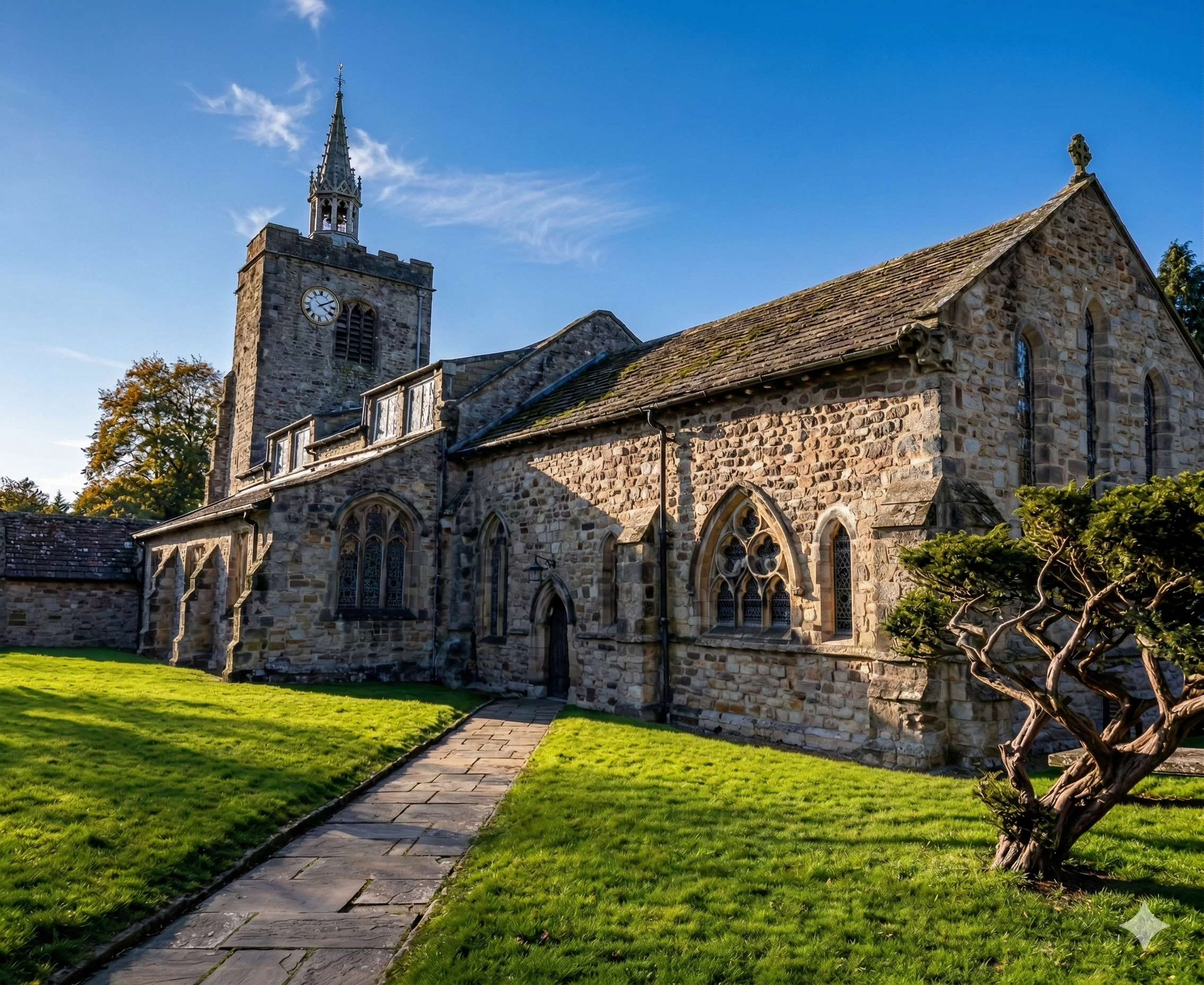
Situated proudly on the banks of the River Ribble, this Grade I listed building is a physical chronicle of British history.
For the architecturally curious and those drawn to the deep past, St. Wilfrid’s is a masterclass in how a single site can bridge the gap between Roman legionaries, Saxon saints, and Georgian musicians.
The Man Behind the Name: St. Wilfrid of York
To truly appreciate this church, one must understand the fiery and brilliant figure to whom it is dedicated. St. Wilfrid (c. 633–709 AD) was one of the most influential and controversial figures in the early English Church.
A Northumbrian noble turned Bishop, he was the primary champion of the Roman traditions over the Celtic ones, famously winning the debate at the Synod of Whitby in 664 AD.
Wilfrid was a man of grand tastes and iron will. He travelled to Rome multiple times, bringing back relics, stonemasons, and glaziers to build grand stone churches in an era of timber and thatch.
He was instrumental in introducing the Rule of St. Benedict to England and was known for his immense wealth, his penchant for ecclesiastical politics, and his missionary zeal.
In the 7th century, the Ribble Valley was part of the Kingdom of Northumbria. Wilfrid was granted lands in this region, and it is widely believed that he established a timber church on this very site during his missionary travels.
When you stand in the nave today, you are standing on ground sanctified by a man who helped shape the very identity of the English Church.
A Church Built of Roman Might
The most striking feature of St. Wilfrid’s is its literal foundation.
It stands directly atop the principia (the headquarters) of the Roman fort Bremetennacum.
As you walk through the churchyard, you aren’t just walking on English soil; you are walking over the administrative heart of a cavalry outpost that once housed 500 elite soldiers.
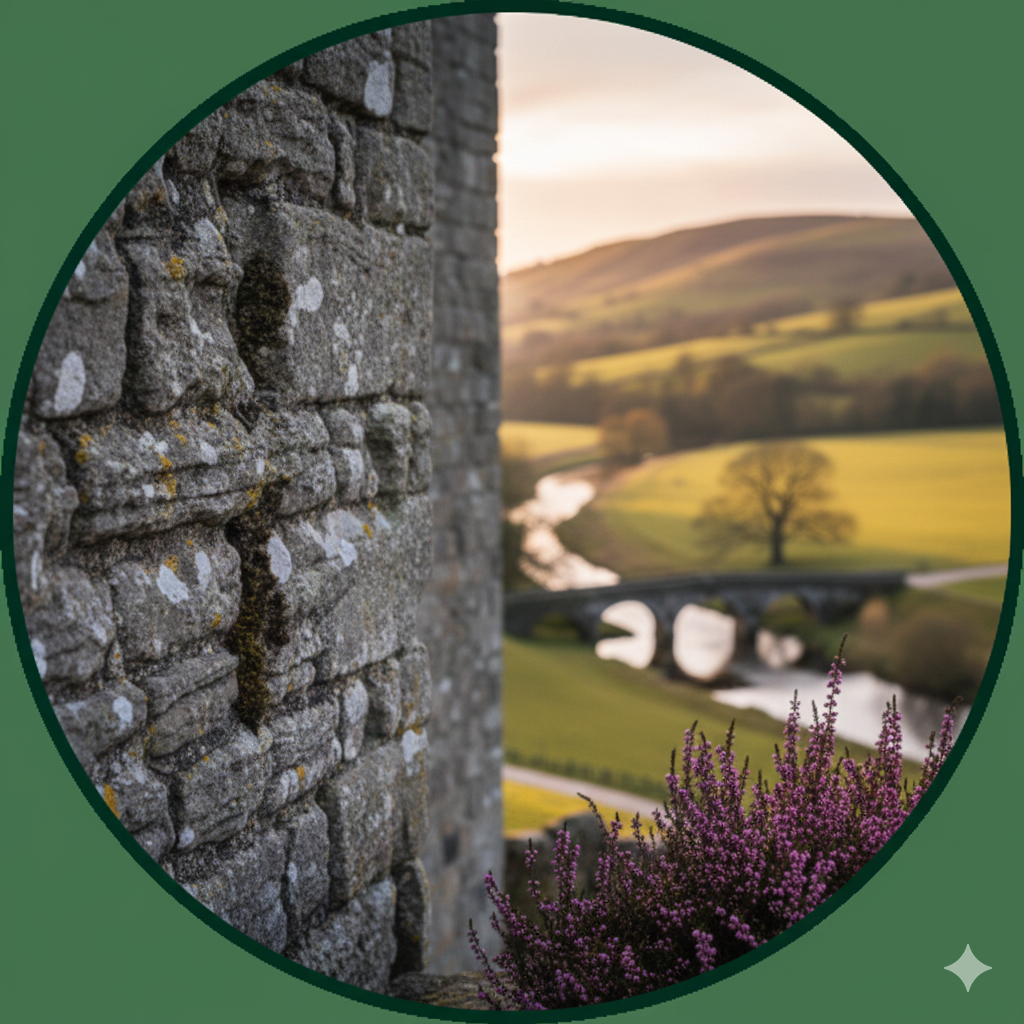
The Romans may have departed in the 4th century, but their architecture remained. Look closely at the masonry of the church walls; you will see the roughly-hewn yellow sandstone blocks salvaged directly from the fort ruins.
Inside, the connection becomes even more tangible: the Musicians’ Gallery (added in 1736) is supported by four stone Tuscan columns that are widely believed to be repurposed Roman pillars.
Standing beneath them, you are separated from the classical world by nothing more than a few coats of paint.
Architectural Highlights: A Timeline in Stone
Though the timber church of Wilfrid’s era is long gone, the building we see today began its stone life around 1220.
- The Chancel and Lancet Windows: The oldest part of the standing structure is the chancel. Its narrow, elegant lancet windows are classic examples of the Early English style.
- The Dutton Choir (North Chapel): Added in the 14th century as a chantry chapel, this area holds one of the church’s greatest treasures: a rare, fading medieval wall painting of St. Christopher carrying the Christ child.
- The Jacobean Pulpit: Dated 1636, this ornate oak pulpit features the initials of the then-vicar, Christopher Hindle. It stands as a beautiful example of 17th-century craftsmanship that survived the turbulent years of the English Civil War.
The “Top 5 Hidden Gems” Checklist
To truly experience St. Wilfrid’s, you must look for the details that many visitors walk straight past:
- The Roman Pillars: Touch the stone of the gallery supports—literal physical pieces of a 2,000-year-old empire.
- The Fading Saint: In the north chapel, find the ghostly remains of St. Christopher. In the Middle Ages, looking upon him was believed to protect travelers from “sudden death” for that day.
- The “Hindle” Pulpit: Witness the spot where Vicar Christopher Hindle was dragged away by Roundhead soldiers for refusing to cease his prayers for the King.
- The Hogback Stone: Search the churchyard for a rare Viking-style “longhouse” monument, a link to the Norse-Gaelic settlers of the Ribble Valley.
- The Memento Mori Sundial: Find the sundial mounted on a medieval cross base. The inscription is hauntingly poetic: “I am a shadow, so art thou. I mark time, dost thou?”
Seeking Solace: The Experience of a Personal Retreat
Beyond the architectural survey, a visit to St. Wilfrid’s offers a profound opportunity for a personal retreat. In an age of digital noise, the thick stone walls provide a natural sanctuary.
To experience this retreat, find a seat in the nave under the 18th-century dormer windows.
Watch how the shifting Lancashire light plays across the ancient wood of the pulpit and the rough Roman stone.
There is a tangible “weight” to the silence here that encourages deep reflection.
Many visitors find that sitting quietly for just twenty minutes allows the frantic pace of modern life to fall away, replaced by the rhythmic peace of a place that has seen empires rise and fall while remaining a constant source of comfort.
Walking to the rear of the churchyard after your visit, where the land meets the river, provides the perfect “closing” to your retreat.
The sound of the water against the backdrop of the Roman granaries serves as a meditative reminder of the flow of time and our own small but significant place within it.
Planning Your Visit
St. Wilfrid’s is an active parish church and remains open daily during daylight hours.
- Refuel: Visit the Ribchester Arms in the heart of the village for generous portions of local Ribble Valley beef and a roaring fire. If you can’t bear to leave, they offer high-quality guest rooms to extend your stay.
- Explore: The church is directly adjacent to the Ribchester Roman Museum. Combine your tour with a walk through the Roman granaries located just outside the churchyard gates.
- Parking: Use the Pope’s Croft car park (Pay & Display); it is a brief, scenic 2-minute walk to the church.
Conclusion: Where the Ages Converge
St. Wilfrid’s is not a museum frozen in time; it is a living, breathing palimpsest where every century has left its mark.
It is a rare place where you can stand in a Christian nave, lean against a Roman pillar, and look out over a Viking graveyard, all while the River Ribble flows timelessly by.
To visit St. Wilfrid’s is to realize that history isn’t a series of closed chapters, but a continuous conversation.
There is a profound sense of perspective to be found here.
Whether you come for the Roman mystery, the medieval art, or the simple, hallowed silence of the Ribble Valley, you will leave feeling like you’ve touched the very fabric of British history.