
The Remarkable Story of Ikutaro Sugi (1875–1905)
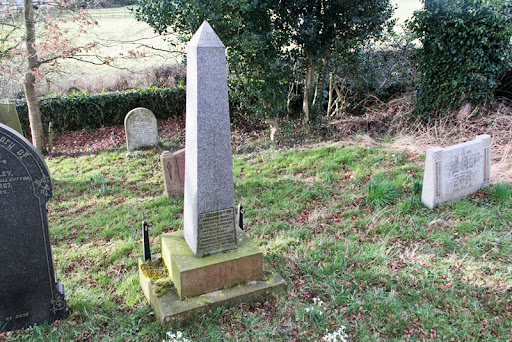
In the quiet churchyard of St John’s Church in Hurst Green, near Clitheroe, stands a gravestone unlike any other in the Ribble Valley.
Among the familiar Lancashire names is an inscription that surprises many visitors:
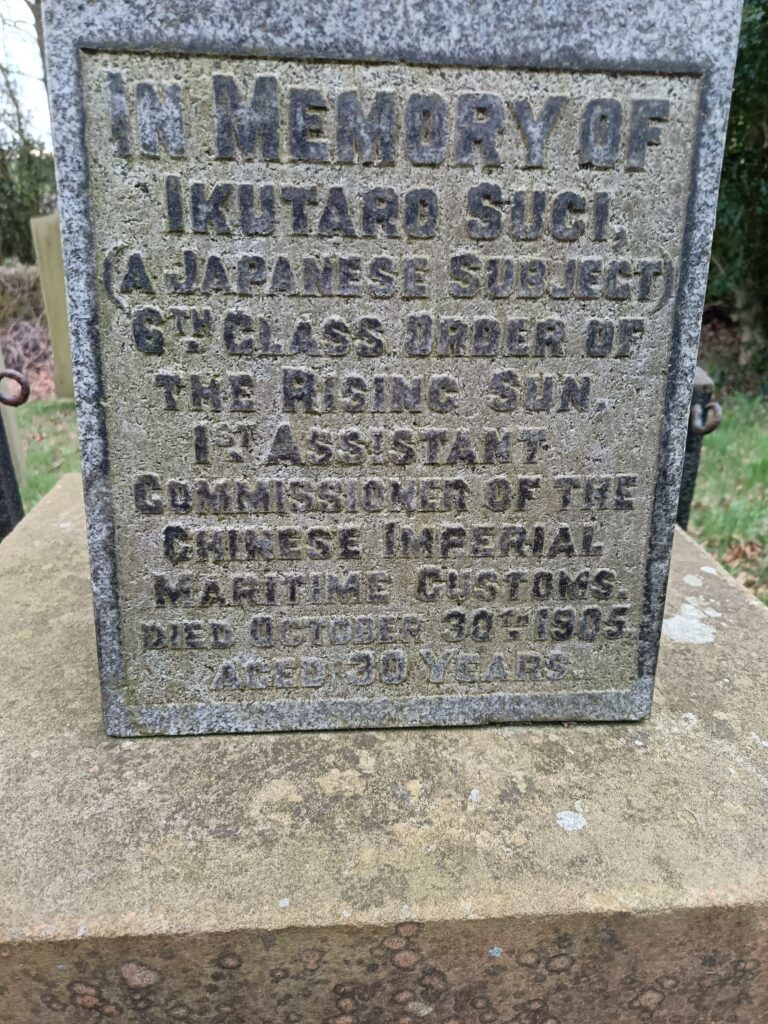
In memory of Ikutaro Sugi, a Japanese subject, Sixth Class Order of the Rising Sun. First Assistant Commissioner of the Chinese Imperial Maritime Customs. Died October 30, 1905, aged 30 years.
Who was this young Japanese official?
How did he come to die in rural Lancashire?
And why is he buried here, far from his homeland?
More than a century later, his grave remains a quiet but powerful reminder of how deeply connected the world already was in 1905.
A Young Man of Meiji Japan
Ikutaro Sugi was born around 1874 or 1875, during Japan’s transformative Meiji era. This was a time when Japan was rapidly modernising — building railways, reforming its schools, strengthening its government, and engaging with the wider world as never before.
He belonged to the first generation of Japanese citizens educated under the modern national school system.
English language ability and international awareness were increasingly valued, especially for those entering government service.
By his late twenties, Sugi had secured a responsible and prestigious role abroad.
Serving in China’s International Customs Service
Sugi worked for the Chinese Imperial Maritime Customs Service, one of the most unusual and international institutions of its time.
Established in the mid-19th century, the Customs Service collected trade duties at China’s treaty ports.
Although it operated under Chinese authority, it was administered largely by foreign professionals. Staff came from Britain, Europe, the United States — and Japan.
For decades it was headed by Sir Robert Hart.
By 1905, Sugi held the rank of First Assistant Commissioner, serving at the busy southern port of Swatow (modern Shantou) in Guangdong province. To reach such a position by the age of thirty suggests he was capable, well-educated, and highly regarded.
His gravestone also records that he had been awarded the Order of the Rising Sun (Sixth Class) — an official Japanese imperial decoration granted for meritorious service.
Though not the highest grade, it was a formal honour conferred by the state, recognising valuable service abroad.
Sugi’s career placed him at the intersection of three empires: Japan, China, and Britain.
Illness and a Journey to England
In 1905, Sugi was officially “invalided” home from China. Swatow, like many ports of the time, was known for difficult sanitary conditions, and tuberculosis and other respiratory illnesses were common among foreign officials serving in East Asia.
Rather than returning directly to Japan, Sugi travelled to Britain.
At the turn of the twentieth century, it was not unusual for officials serving overseas to seek medical treatment or convalescence in England.
Passenger records indicate that he likely arrived in London in the spring of 1905, probably aboard a Nippon Yusen Kaisha steamship.
From London, he travelled north to Lancashire.
At the time of his death, local records indicate he was residing at “The Warren” (now Warren Fold) near Stonyhurst College.
The Ribble Valley’s rural air and peaceful surroundings may have been considered beneficial for recovery.
Sadly, his illness proved fatal. Ikutaro Sugi died on 30 October 1905, aged just thirty.
A Funeral of International Significance
His funeral at St John’s Church drew considerable attention locally.
Contemporary reports describe the presence of official representatives, including the Japanese Consul and a delegate from the London Office of the Chinese Maritime Customs Service.
His coffin was draped in the flag of the Rising Sun.
For a small Lancashire village, this must have been a remarkable sight: a formal ceremony for a decorated Japanese official, attended by diplomatic representatives, in the shadow of Stonyhurst.
Repatriating a body to Japan in 1905 would have been costly and complex.
Burial in England — particularly if death occurred during treatment — was not uncommon.
And so, Ikutaro Sugi was laid to rest in Hurst Green.
A Life Between Worlds
Though he lived only thirty years, Sugi’s life tells a larger story.
He was:
- Born in modernising Meiji Japan
- Employed in Qing dynasty China
- Decorated by the Japanese Empire
- Buried in rural Lancashire
His grave is a quiet but striking reminder that the Ribble Valley, like the rest of Britain, was already part of a deeply interconnected world at the start of the twentieth century.
Trade, diplomacy, empire, and global administration linked even the most peaceful English villages to events and institutions thousands of miles away.
Why His Grave Still Matters
Visitors who pause at Sugi’s grave often feel a sense of curiosity — even wonder. It raises questions about identity, service, illness, distance, and belonging.
More than anything, it reminds us that history is not only local or national. It is global.
In the stillness of St John’s churchyard, far from the archipelago of his birth, Ikutaro Sugi rests — a young official whose life bridged continents, and whose story quietly connects Hurst Green to the wider world of 1905.