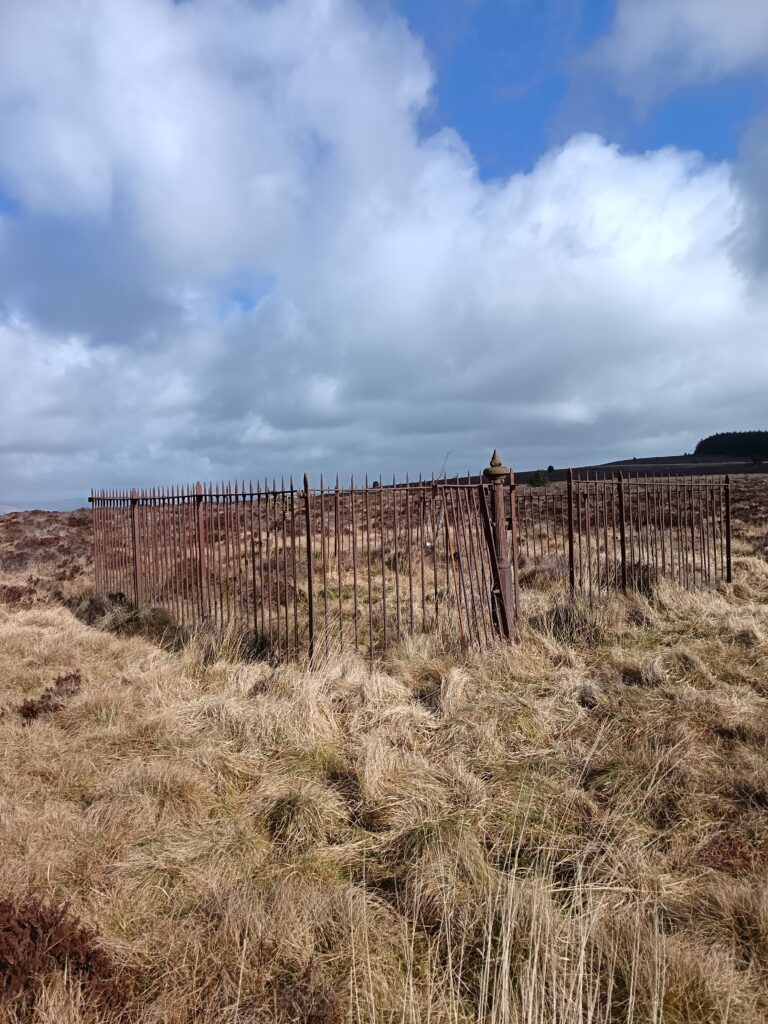
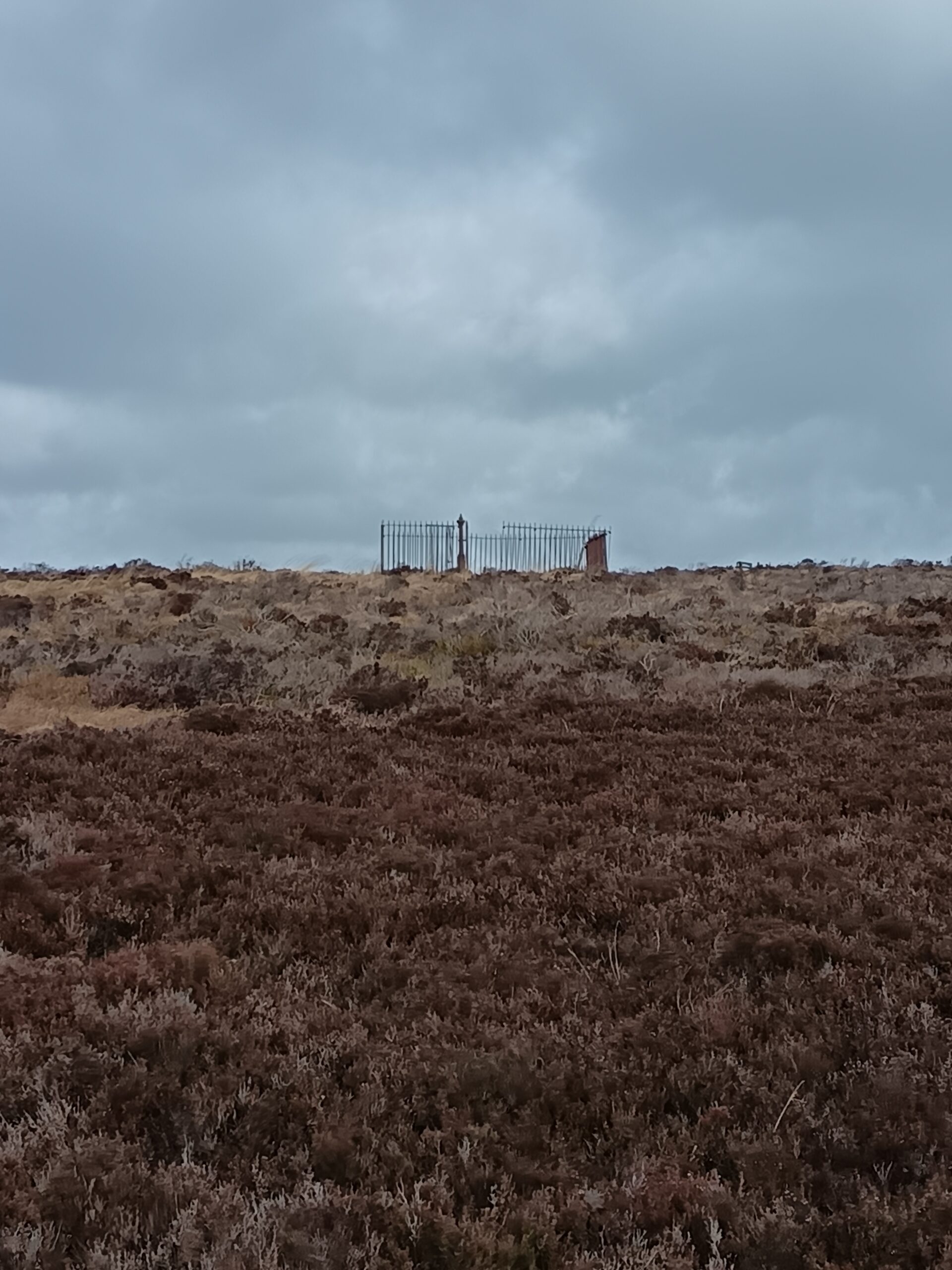
High above Longridge, where the wind bites across the shoulder of Jeffrey Hill, sits a feature that feels strikingly out of place.
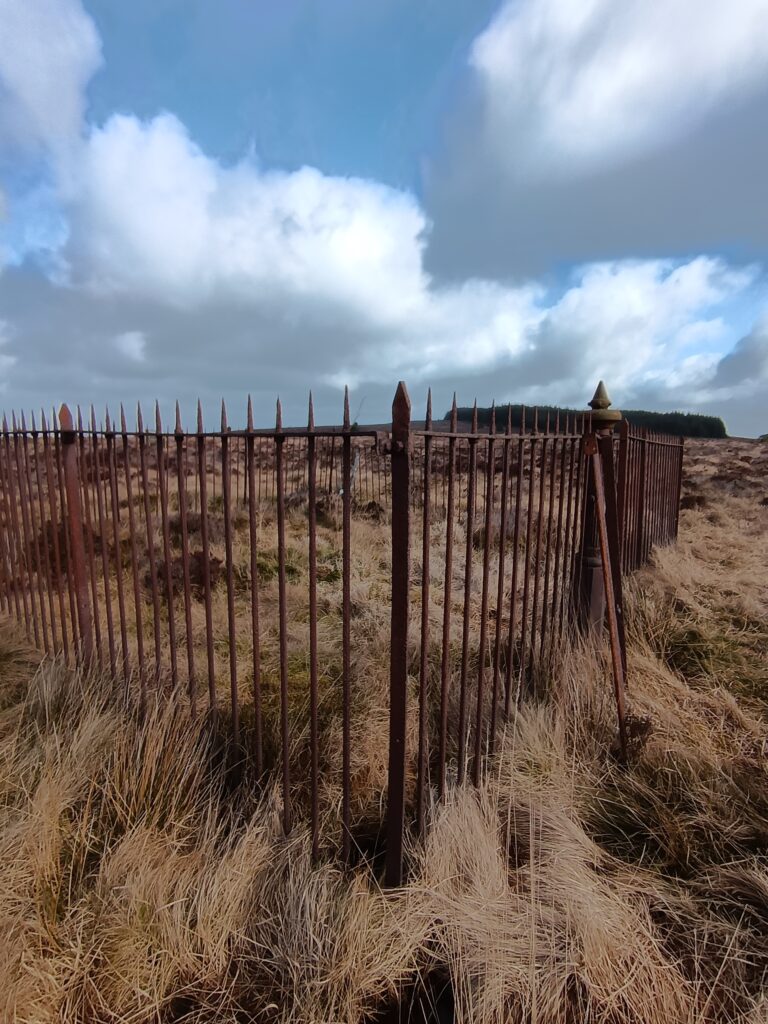
It isn’t the sprawling views towards the Irish Sea or the distant silhouette of Parlick that catches the eye of the observant hiker, but rather a small, lonely square of wrought iron fencing.
Tumbled, rusted, and seemingly guarding nothing but a patch of moss and peat, this “Iron Square” has become a focal point for local speculation.
Is it a forgotten grave, a Victorian folly, or a protective cage for something that has long since vanished?
The Anatomy of a Mystery
To understand the feature, one must look at the craftsmanship.
Located roughly at SD 64761 40418, the enclosure is approximately 12ft x 10ft.
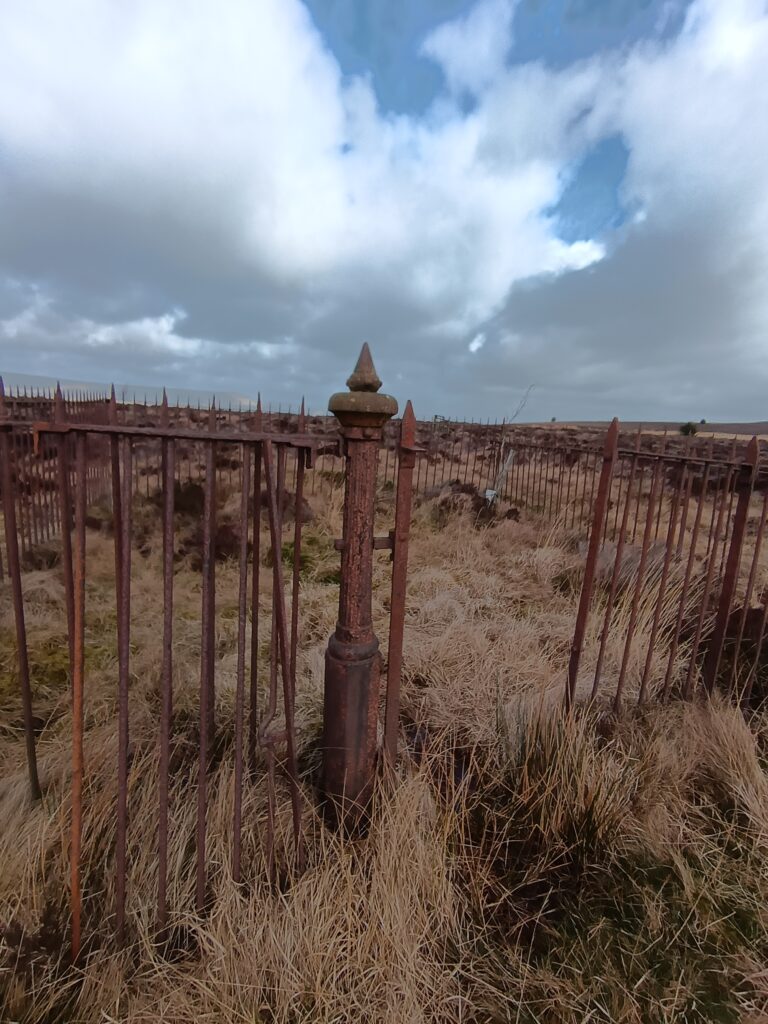
The fencing is heavy, traditional blacksmith-made iron, secured with square-headed nuts and bolts—a clear signature of late 19th-century engineering.
The presence of a small, now-stuck gate suggests that this was never meant to be a permanent seal, but rather a managed enclosure. But what was it managing?
Theory 1: The Guardian of the “Missing” Stone
The most compelling archaeological theory is that the fence was a Victorian attempt at preservation.
Jeffrey Hill is a landscape of the dead; it is home to several Bronze Age cairns and burial mounds dating back over 3,000 years.
In the 1800s, antiquarian interest in “cup-and-ring” marked stones was at a fever pitch.
It is highly probable that this fence once protected a specific, decorated stone or a “satellite” marker of the nearby Cairn Circle.
Whether the stone was stolen by collectors in the early 20th century or has simply been “swallowed” by the rising peat levels remains a subject of debate among local fell-walkers.
Theory 2: The Jubilee Beacon
Others point to a more “fiery” history. During Queen Victoria’s Golden Jubilee in 1887, a chain of beacons was lit across the summits of Britain.
Jeffrey Hill, with its commanding views of the Ribble Valley, was a primary candidate for a relay station.
The iron square may have served as a permanent base for a beacon brazier, designed to keep livestock and the public away from the scorching heat of the signal fires.
If so, the “nothingness” inside the fence is actually the footprint of a celebration that lit up the Lancashire sky over a century ago.
A Tangible Experience: The Visitors’ Guide
If you are headed out to find the “Iron Square” for yourself, here is how to bridge the gap between the modern trail and ancient history:
- The Approach: Park at the Jeffrey Hill car park (the one with the stunning views toward the Bowland Fells). Instead of heading straight for the summit path, strike out North-East toward the higher ground.
- What to Look For: The fence is low-profile and easily missed in high summer fern. Look for the glint of black iron against the green and brown of the fell.
- The Details: Take a moment to examine the bolts. The square heads are a tactile link to the Victorian blacksmiths who hauled this iron up the steep incline—a testament to how much they valued whatever was once inside.
- The Surroundings: Just a short distance away lies the Jeffrey Hill Cairn Circle. Standing between the Victorian iron and the Bronze Age stones, you are positioned between two vastly different eras of Ribble Valley history.
The Mystery Hiding in Plain Sight
The “Iron Square” reminds us that history isn’t always found in museums; sometimes, it’s a rusted gate in the middle of a bog.
It represents a moment in time when Victorians looked at the ancient fells and decided that something—be it a stone or a signal—was worth protecting for the future.
While the object it guarded may be gone, the enclosure remains: a square-shaped question mark on the face of the Longridge Fell.