
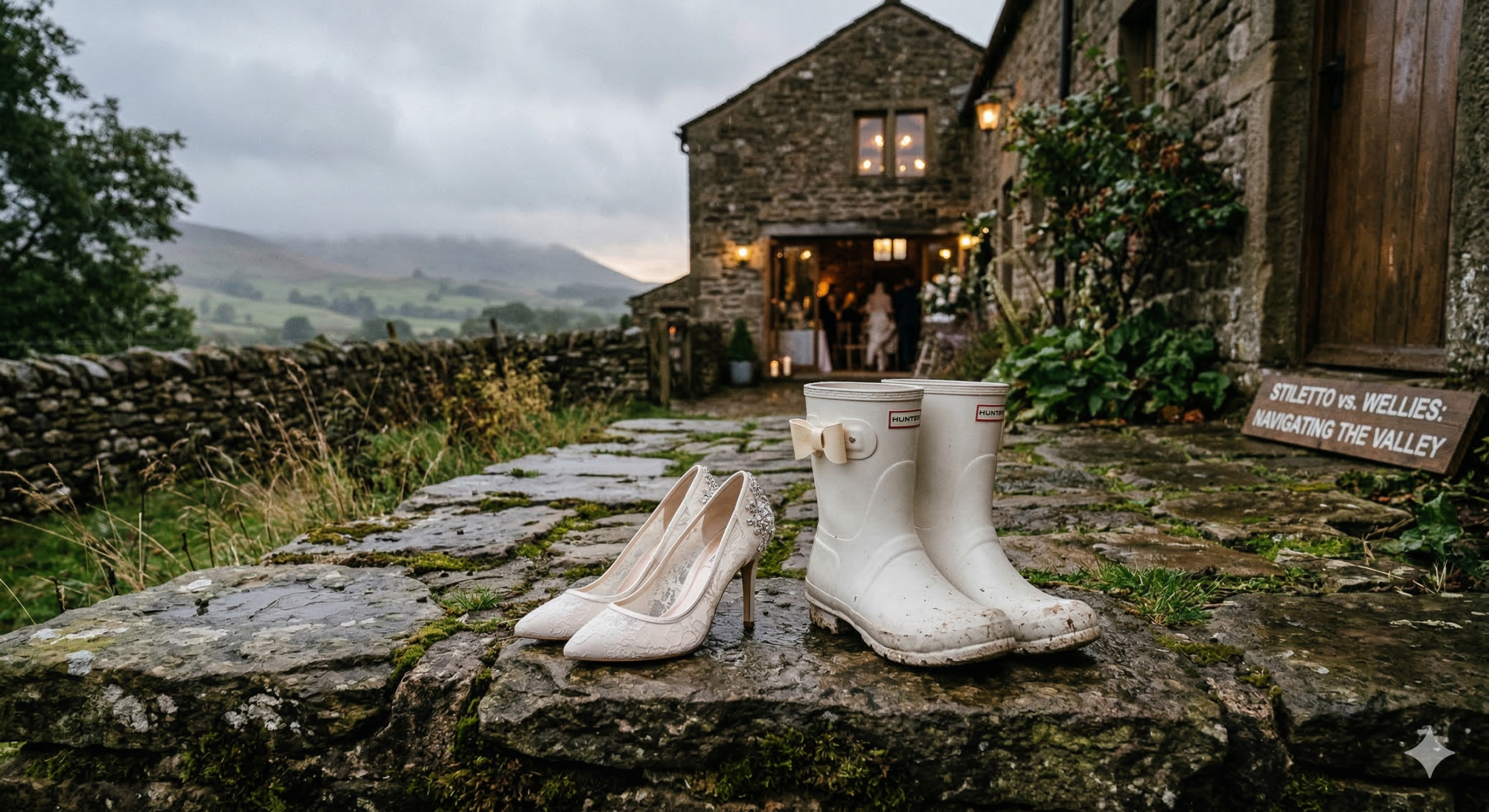
The Ribble Valley is defined by its textures: weathered stone, wild moorland, and ancient timber. While these make for a breathtaking backdrop, they present a unique challenge for traditional wedding footwear.
To have a seamless day, you need to bridge the gap between “high fashion” and “high practicality.”
1. The Cobblestone Challenge
Many of our most romantic venues, such as Browsholme Hall or the streets surrounding Clitheroe Castle, feature original 18th-century cobblestones.
- The Stress Point: Thin heels and uneven stone are a recipe for twisted ankles.
- The Practical Advice: If your heart is set on a stiletto for the ceremony, invest in clear heel stoppers. These small plastic attachments increase the surface area of your heel, preventing you from sinking into gaps between stones or turf.
2. The “Soft Ground” Reality
In the valley, even a sunny day doesn’t mean the ground is dry. The clay-heavy soil near the river banks stays soft long after the rain has stopped.
- The Strategy: For outdoor ceremonies at venues like Hobbit Hill or The Out Barn, suggest a Block Heel or a Wedge.
- The Tangible Detail: Block heels distribute your weight more evenly. This means you can walk down a grass aisle with confidence rather than performing a “toe-only” balancing act.
3. The “Wellie” Photo Opportunity
In the Ribble Valley, wellies aren’t a sign of a “ruined” day; they are a badge of honour.
Some of the most iconic “Valley” wedding photos feature a bride in a high-end lace gown and white or metallic Hunter boots.
- The Pro Move: Keep a pair of “Bridal Wellies” in the car. When your photographer suggests heading into the long grass or the woodland at Stirk House for those sunset portraits, you can swap your heels in seconds.
- Guest Tip: In your “Signal Blackout” info pack or website, add a note: “We love our rural setting! We recommend block heels or wedges for the afternoon, and feel free to bring your wellies for the late-night campfire.”
4. The “Room Flip” Footwear Shift
A Ribble Valley wedding is often a marathon of different terrains: a stone ceremony room, a gravel courtyard for drinks, and a wooden barn floor for dancing.
- The Logistics: Encourage a “Second Shoe” policy. A basket of flip-flops or dancing pumps near the dancefloor is a standard guest-comfort hack, but for the Ribble Valley, consider smart ankle boots for the evening. They look fantastic with a midi-dress and are much more suited to a trek across a gravel courtyard to the taxi.
5. For the Grooms: Suede vs. Leather
- The Warning: Suede shoes are beautiful but they are “one-use only” in a damp Lancashire meadow.
- The Advice: Opt for polished leather brogues or boots. Leather is easier to wipe clean of the inevitable mud or grass stains, ensuring you still look sharp for the wedding breakfast.
The Terrain-Ready Checklist:
- [ ] Heel Stoppers: A “must-buy” for any guest wearing a heel thinner than a thumb.
- [ ] The “Welly Swap”: Brides should have their boots ready for the “adventure” photos.
- [ ] Gravel Warning: Mention “uneven surfaces” on your invitations so guests don’t bring their brand-new, thin-soled designer shoes.
- [ ] The Emergency Kit: Keep a pack of wet wipes in the bridal suite to quickly clean mud off hemlines or shoe toes.
The Final Verdict: Comfort is the New Luxury
In the Ribble Valley, nobody cares if you are wearing stilettos if you are too uncomfortable to walk to the viewpoint.
The most stylish guests are the ones who look like they belong in the landscape—comfortable, confident, and ready for whatever the valley throws at them.
When you dress for the terrain, you aren’t “settling”—you are ensuring that the only thing you’re thinking about is the person at the end of the aisle, not the mud on your heels.