
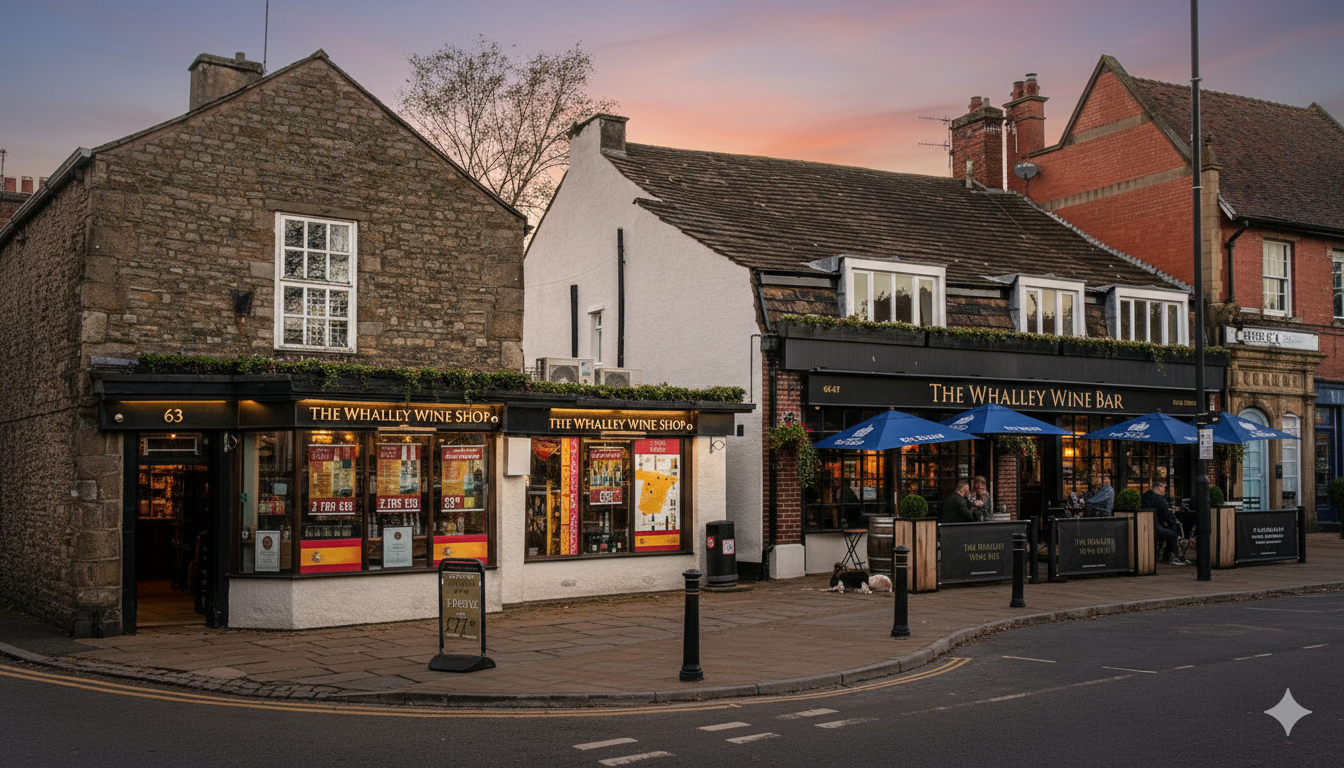
Whalley is one of the most popular villages in the Ribble Valley, known for its historic abbey, great pubs, independent cafés and scenic countryside. Whether you’re visiting for a day out or exploring the wider Ribble Valley, there are plenty of things to do in Whalley.
This guide covers the best things to do in Whalley, including places to eat, drink and explore.
What to Do in Whalley (Quick Guide)
If you’re visiting Whalley for the first time, this is the simplest way to plan your visit:
- Start at Whalley Abbey and explore the grounds
- Take a short riverside walk along the River Calder
- Head back into the village for coffee or a drink
- Finish with a pub lunch or evening meal
Everything is within walking distance, which is what makes Whalley such an easy and enjoyable place to visit.
Best Places to Visit in Whalley
Whalley Abbey
The main attraction in the village, Whalley Abbey offers peaceful grounds, historic ruins and riverside views. It’s the best place to start your visit.
Whalley Viaduct
A short walk from the centre, this large stone viaduct is one of the most recognisable landmarks in the area and worth seeing as part of a short loop.
Village Centre
The heart of Whalley is compact and easy to explore, with a mix of independent shops, cafés and pubs. It’s best experienced by simply wandering without a fixed plan.
Where to Eat & Drink in Whalley
Whalley is one of the best places in the Ribble Valley for food and drink, but it’s worth planning ahead — especially at weekends.
- For a relaxed pub atmosphere, head to one of the village’s central pubs
- For a better meal, book a table in advance as places fill up quickly
- Cafés are best visited earlier in the day, particularly for coffee or brunch
👉 See our guide to the best pubs in Ribble Valley
👉 Discover the best restaurants in Ribble Valley
👉 Find cafés in Ribble Valley
A Simple Walk in Whalley
One of the best ways to experience Whalley is with a short walk:
- Start at Whalley Abbey
- Walk towards the River Calder
- Follow the riverside path
- Loop back into the village
This takes around 30–45 minutes and is suitable for most people.
👉 Explore more Ribble Valley walks
Whalley: A Masterclass in Medieval Roots and Modern Ribble Valley Style
Nestled at the foot of Whalley Nab and bisected by the River Calder, Whalley is more than just a gateway to the Ribble Valley; it is a masterclass in how a village can maintain deep medieval roots while fostering a sophisticated modern culture.
Whether you are a history enthusiast or seeking an upscale weekend retreat, Whalley offers a density of experience that belies its size, bridging the gap between ancient philosophy and practical modern luxury.
The Weight of History: Stone and Brick
Whalley’s identity is anchored by two significant monuments that tell the story of the region’s spiritual and industrial evolution.
Whalley Abbey
Founded in the 14th century, this former Cistercian monastery was once one of the wealthiest in Northern England.
The ruins today offer a hauntingly beautiful walk through the foundations of the abbey church and the remarkably preserved gatehouses.
- The Experience: Walk through the cloisters where the layout was uniquely adjusted to the flow of the River Calder.
- Practical Detail: Look for the “choir pits” in the church foundations—rare acoustic features designed to amplify the monks’ chanting. The ruins are generally open daily from 10:00 to 16:30.
The Whalley Viaduct
Dominating the village skyline, this Victorian masterpiece is the longest brick viaduct in Lancashire.
Completed in 1850, it comprises 48 arches and required roughly seven million bricks.
It serves as a stark, red-brick contrast to the ancient stone of the Abbey and remains a functioning marvel of the Ribble Valley Line.
Modern Life: Boutique Shopping & Fine Dining
Whalley has evolved into a stylish hub for independent retail and gastronomy, making it a popular destination for those who appreciate “the finer things” without the city-centre rush.
Where to Eat & Stay
| Venue | Type | Why Visit? |
| Mitton Hall | Hotel & Brasserie | A 15th-century manor house that redefines country luxury with refined British cuisine. |
| Whalley Abbey | B&B / Retreat | Stay within the actual Abbey grounds for a truly unique, tranquil experience. |
| The Swan Hotel | Coaching Inn | A 250-year-old Grade II listed inn in the village center, perfect for local ale. |
| The Aspinall Arms | Riverside Pub | Located in nearby Mitton, offering stunning views of the medieval church and seasonal dishes. |
Independent Retail
- Whalley Warm & Dry: An award-winning outdoor specialist known for expert boot-fitting—essential if you plan to tackle the nearby Pendle Hill.
- The Nab Lab: A local gin distillery where you can sample spirits inspired by the Ribble Valley landscape.
Practical Information for Visitors
Best Time to Visit
- Summer (June – August): Prime for outdoor exploration, with temperatures averaging a comfortable 19°C.
- Spring 2026: March and April are vibrant this year. Keep an eye out for the Railway 200 celebrations, marking two centuries of rail history with special events centered around the viaduct.
- Winter (January – February): Ideal for foodies visiting the nearby Obsession festival at Northcote, just ten minutes away.
Arrival & Logistics
- By Train: Whalley is on the Ribble Valley Line, with direct hourly services from Manchester Victoria and Blackburn.
- By Car: Accessible via the A59. Central parking is available at “The Sands” near the primary school, though it fills quickly on weekends.
- The Viewpoint: For the best “postcard” angle of the 48 arches, follow the path from the village centre through Spring Wood.
A Timeless Connection
Whalley is a rare destination where the transition from a 14th-century cloister to a 21st-century wine bar feels entirely natural.
It invites you to spend a morning walking in the silent footsteps of Cistercian monks and an afternoon enjoying the vibrant, entrepreneurial energy of its high street.
Whether you are standing beneath the shadow of the great viaduct or sitting by the fire in a centuries-old coaching inn, Whalley reminds us that history isn’t just something to be studied—it’s something to be lived.
As you depart across the Calder, you’ll likely find that while you came for the landmarks, you’ll return for the atmosphere.