Hurst Green is a village that carries the weight of history with a rare, quiet grace.
Situated in the heart of the Ribble Valley in Lancashire, just a few miles from Clitheroe, it is a settlement defined by more than just its picturesque stone cottages.
To the historian, it is a living map of English recusancy, Jesuit tradition, and the enduring influence of the landed gentry.
The identity of Hurst Green is inseparable from the Stonyhurst Estate, which has acted as the village’s primary architect for centuries.
This is a place where the landscape feels scripted by the past—from the grand, twin-towered silhouette of Stonyhurst College to the humble stone crosses marking ancient ways.
It is known for its deep-rooted Catholic heritage, its literary associations with J.R.R. Tolkien, and a community life centred around the village green, the school, and the local clubs.
To understand Hurst Green is to understand how a small Lancashire corner became a focal point for international faith, education, and imagination.
Historical Foundations of the Village
The origins of Hurst Green are tied to the “hurst” or wooded hill from which it takes its name.
Its development was meticulously guided by the Shireburn and later the Weld families, creating a product of the 17th to 19th centuries designed to serve the great estate at its borders.
One of the most striking architectural witnesses to this history is the Shireburn Almshouses.
Originally located on Longridge Fell, these distinctive buildings were moved to their current site in the village in the 1940s.
Founded by Richard Shireburn in 1706, they were intended to provide sanctuary for the “deserving poor” of the estate.
Their presence today serves as a reminder of a bygone social contract, where the wealth of the manor was legally bound to the welfare of the village’s elderly and infirm.
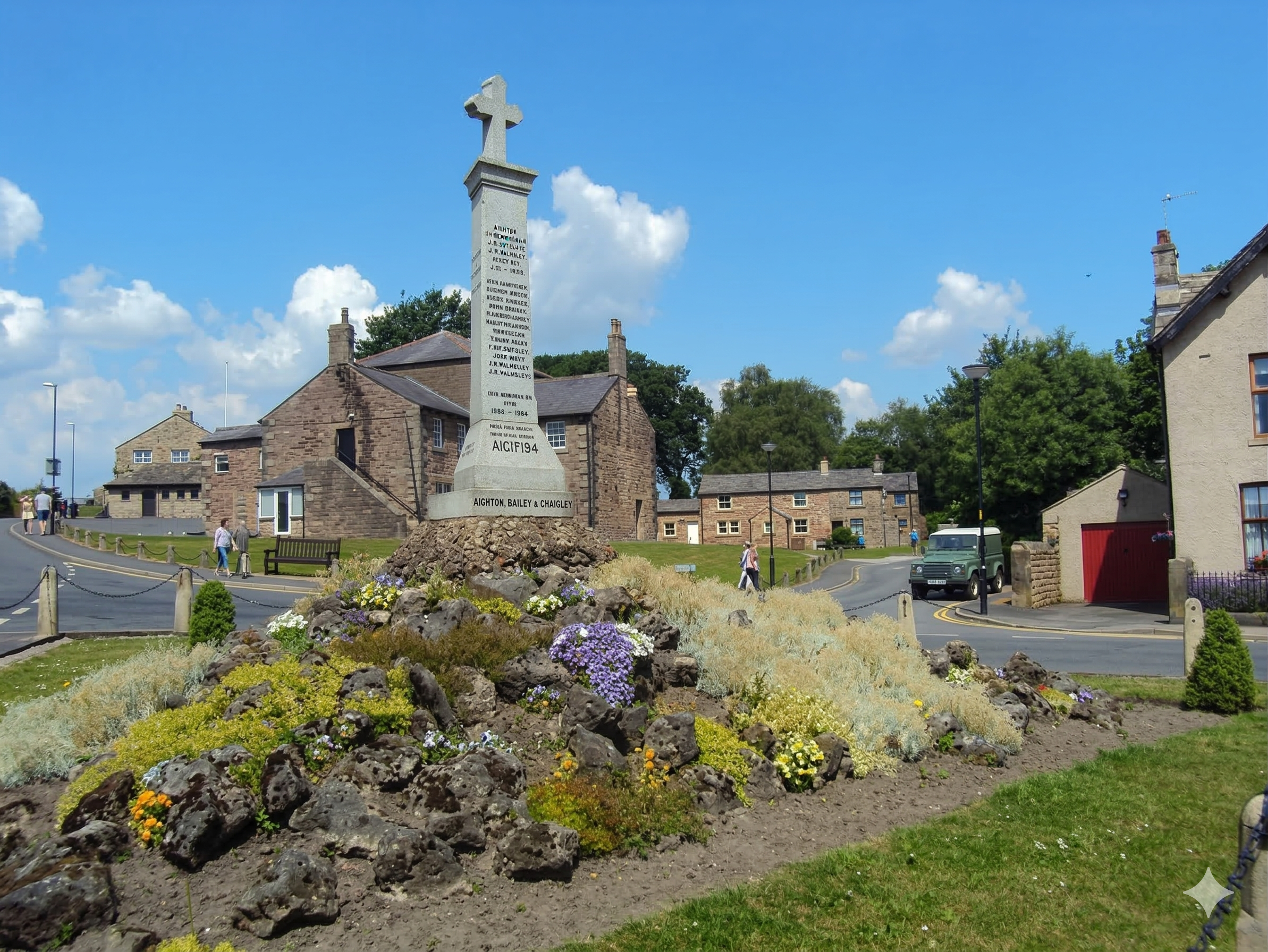
At the heart of the village stands the cenotaph, a poignant landmark positioned where the roads meet, ensuring the names of those lost in military conflicts remain a daily presence.
Equally significant are the stone crosses punctuating the local landscape.
These “wayside crosses,” some medieval, served as funeral markers or prayer stations during the centuries when Catholic worship was restricted, providing a tangible link to a time when walking through Hurst Green was an act of faith.
Stonyhurst College and St. Peter’s Church
It is impossible to discuss Hurst Green without acknowledging Stonyhurst College.
This formidable Jesuit institution is one of the most significant Catholic buildings in the English-speaking world. The Jesuit community arrived in 1794, fleeing the French Revolution, and were gifted the estate by Thomas Weld.
The college’s Elizabethan core, with its magnificent gatehouse and twin towers, was built by Sir Richard Shireburn in the late 16th century.
Adjacent to the college is the spectacular St. Peter’s Church. Opened in 1835, it serves as the college chapel and stands as a breathtaking example of Gothic Revival architecture, reflecting the Jesuits’ commitment to both aesthetic beauty and spiritual rigour.
The influence of Stonyhurst on Hurst Green is total, having been the primary employer and cultural anchor for centuries.
Religious and Memorial Heritage
Within the village itself, St. Joseph’s RC Primary School stands as a vital pillar of the community.
As a Jesuit school, it maintains the educational traditions of the Society of Jesus, ensuring the village’s children are raised within the same philosophical framework that defines the neighbouring college.
While the Catholic presence is dominant, the village is also home to St. John’s the Evangelist Church.
Built in the 1830s, St. John’s stands as a testament to the Anglican presence in the region.
The churchyard is a site of significant historical interest, housing several Commonwealth War Graves and one particularly notable monument: the grave of Ikutaro Sugi.
The inscription on the obelisk reveals a far more prestigious story than local myth often suggests.
Ikutaro Sugi was a First Assistant Commissioner of the Chinese Imperial Maritime Customs and a holder of the 6th Class Order of the Rising Sun. He died in 1905 at the age of 30.
His burial here, far from home, is a testament to the international reach of the Stonyhurst community and the high-ranking individuals who were drawn to its orbit.
Folklore and Local Stories
Hurst Green’s history is complemented by folklore that adds a mysterious character to its lanes.
The most famous tale concerns Ned King, a notorious highwayman said to be an associate of Dick Turpin.
Legend suggests King used the dense woods around the Ribble Valley to evade capture, finding refuge in the village’s inns.
Central to this was the former Punchbowl Inn. For years, visitors were told of Ned King’s ghost and the “highwayman’s chair.”
While the building has been demolished, the legend of Ned King remains a staple of local identity, reflecting a time when the rugged terrain made the Ribble Valley a true frontier land.
The Tolkien Connection
In recent decades, Hurst Green has gained international fame as the start of the Tolkien Trail.
J.R.R. Tolkien spent considerable time at Stonyhurst in the 1940s while his son, John, was a priest in training and Michael was teaching.
The landscape of the Ribble Valley—the confluence of the Ribble, Hodder, and Calder, the dense woods, and the loom of Pendle Hill—is widely believed to have influenced his descriptions of Middle-earth.
Local names like “New Hey” and “Shire Lane” carry clear echoes of the Shire.
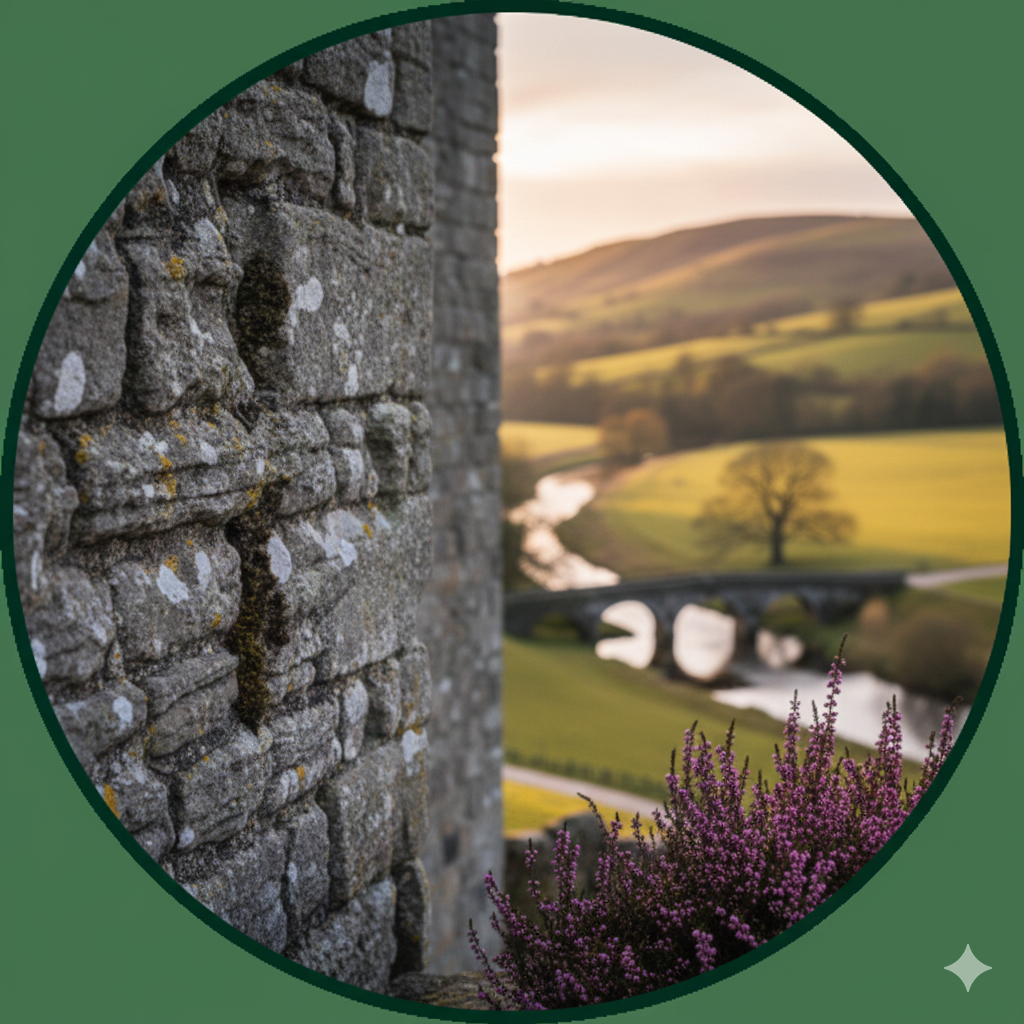
The Tolkien Trail allows walkers to see the vistas Tolkien saw, including the ancient stone bridges and the mists rising off the water.
Modern Village Life
While history provides the frame, the community provides the life. St. Peter’s Catholic Club is a vital social hub, acting as a centre of village life where residents gather for community events and social connection.
This, along with the Hurst Green Football Club and the local bowling club, ensures the village remains a vibrant, living community.
The village’s social geography is further defined by the Shireburn Arms, a 17th-century coaching inn that remains a thriving hub, while the (currently closed) Bayley Arms remains an architecturally significant landmark whose future is a constant point of local discussion.
Why Hurst Green Remains Significant
Hurst Green offers a rare continuity of English life. It is not a “dormitory” village; it is an estate village where the 17th, 19th, and 21st centuries exist in balance.
Visitors find a place of “layered” history, where the majesty of Stonyhurst and the spiritual heart of St. Peter’s meet the lived reality of a modern Lancashire community.
Hurst Green is known for the architectural majesty of Stonyhurst College, the spiritual legacy of St. Peter’s, and the educational foundations of St. Joseph’s.
It is defined by the distinguished memory of Ikutaro Sugi and the literary inspiration found by J.R.R. Tolkien.
Yet, it is also defined by its people—the life found in St. Peter’s Catholic Club and the resilience of a village that has served as a cultural and religious sanctuary for over two hundred years.
It remains a jewel of the Ribble Valley, a place that remembers its past while remaining firmly rooted in the beauty of the Lancashire countryside.