When travellers contemplate the English countryside, the mind typically drifts toward the jagged fells of the Lake District, the honey-hued limestone of the Cotswolds, or the dramatic moorlands of the Yorkshire Dales.
These landscapes are the heavyweights of British tourism, celebrated in literature and populated by millions of visitors annually.
Yet, nestled quietly between these famous peaks and dales lies a region that offers an equally compelling tapestry of rural life, history, and topography, without the clamour of the crowds.
The Ribble Valley, situated in the heart of Lancashire, is a place of understated elegance.
It does not shout for attention, nor does it rely on the theatricality of mountain passes to prove its worth. Instead, it offers a sophisticated blend of rolling green hills, ancient woodland, and some of the finest gastropubs in the United Kingdom.
As part of the Forest of Bowland—an Area of Outstanding Natural Beauty now known as a National Landscape—it remains one of the few places in England where you can walk for hours through prime countryside and encounter more sheep than people.
To visit the Ribble Valley is to step into a landscape that feels remarkably functional and lived-in; it is not a museum piece for tourists, but a thriving, authentic rural community that rewards those who prefer discovery over the beaten path.
Unspoilt Countryside Without the Crowds
The primary appeal of the Ribble Valley is its profound sense of space.
While the nearby Lake District often suffers from “honeypot” congestion, the Ribble Valley remains expansive and serene.
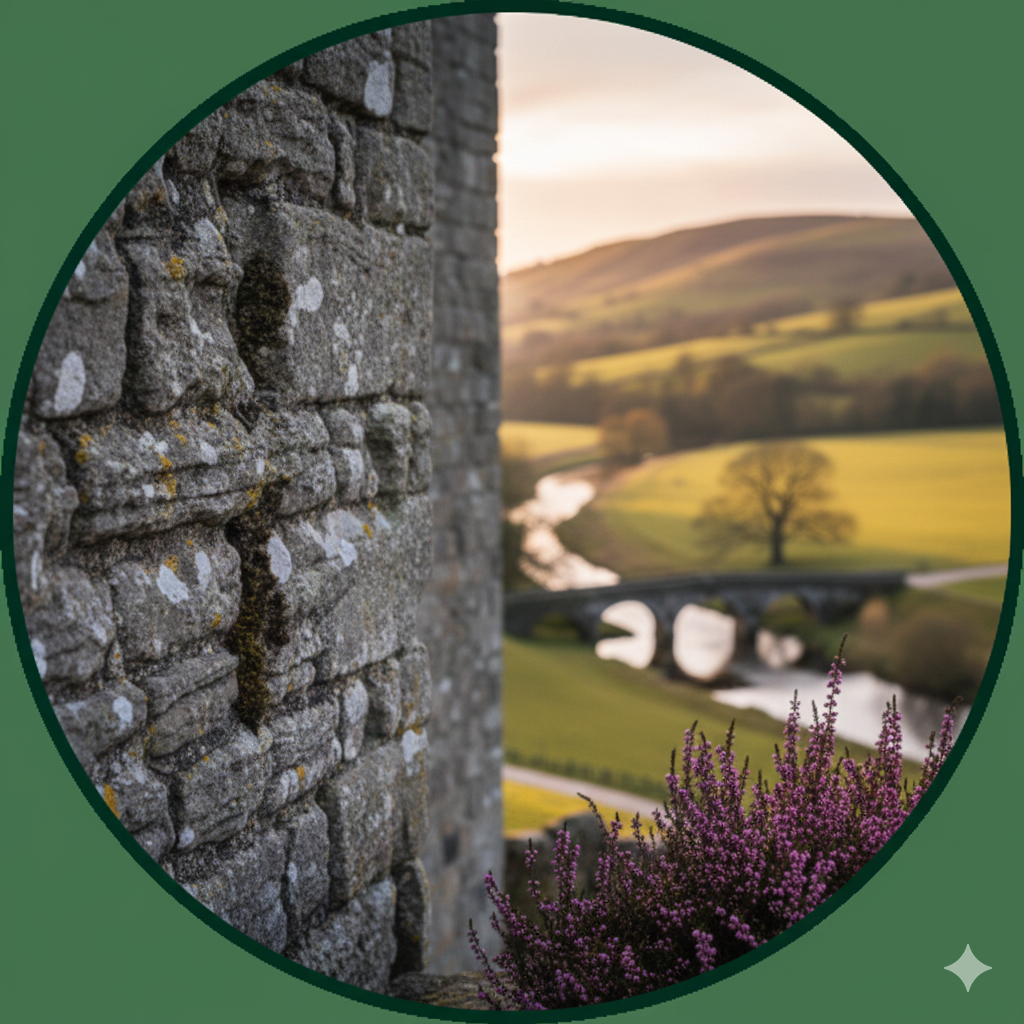
The landscape here is defined by the meandering River Ribble, which carves a fertile path through lush farmland, and the dramatic gritstone and limestone outcrops that provide a rugged contrast to the valley floor.
Central to this experience is the Forest of Bowland National Landscape. Despite the name, this is not a dense thicket of trees, but a vast upland of heather moorland and blanket bog.
It is a place of wide-open skies and “Dark Sky” status, making it a sanctuary for stargazers and birdwatchers alike. The walking routes here are diverse.
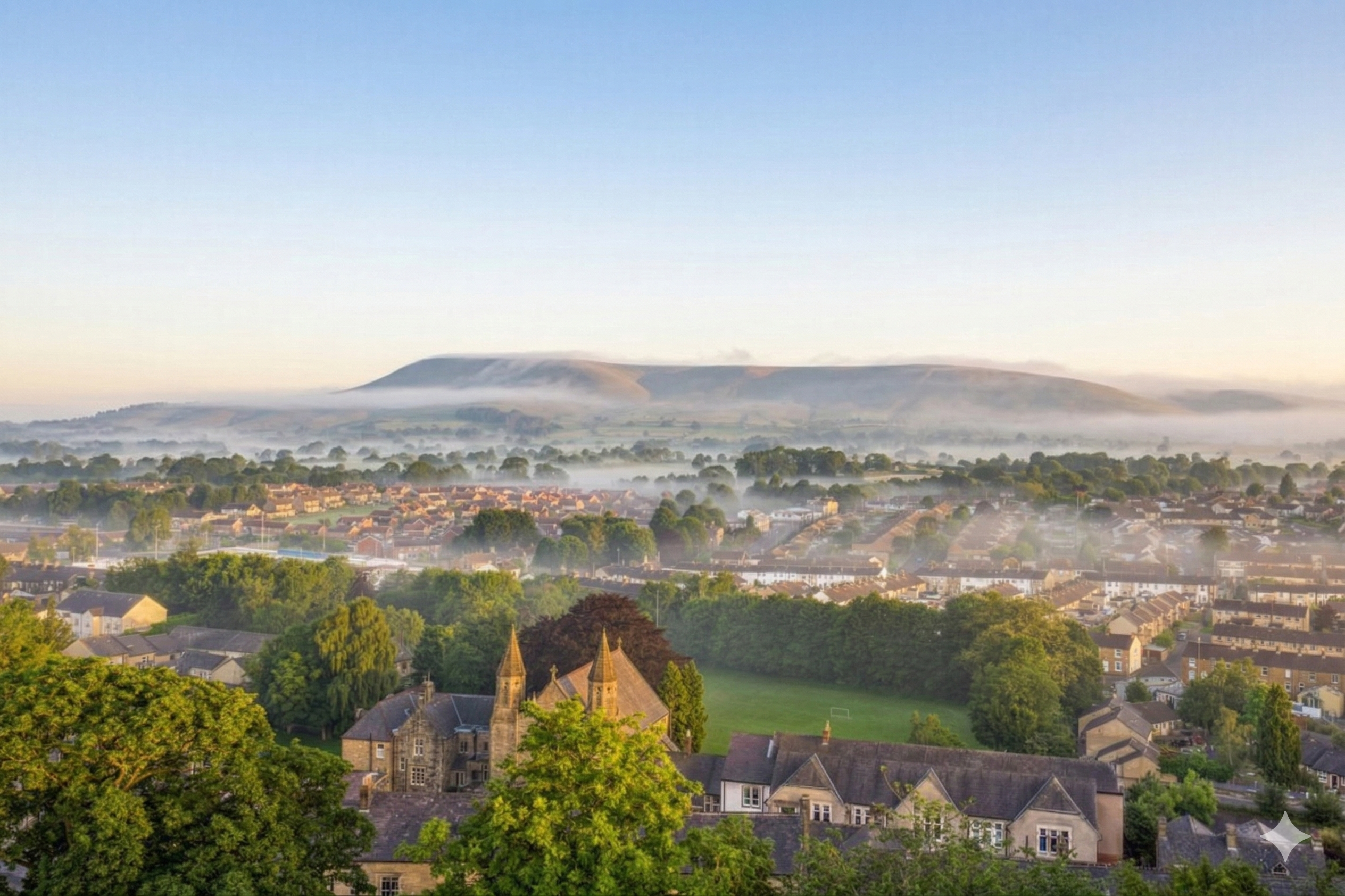
One can tackle the ascent of Pendle Hill, famous for its association with the 17th-century witch trials, which offers a panoramic view stretching as far as the Blackpool Tower and the peaks of Snowdonia on a clear day.
Alternatively, a traverse across Longridge Fell provides a softer, though no less rewarding, perspective of the valley’s patchwork fields and winding lanes.
The beauty of the Ribble Valley is its accessibility for walkers of all abilities. Unlike the technical scrambles of the higher fells to the north, the terrain here is undulating and welcoming.
It is the kind of landscape that invites you to linger, to lean over a dry-stone wall, and to appreciate the rhythmic cycles of a working agricultural environment.
Characterful Villages and Market Towns
The human footprint in the Ribble Valley is as historic as the land itself. The region is dotted with villages that appear to have resisted the homogenisation of modern Britain.
Clitheroe, the valley’s principal market town, serves as a perfect cultural anchor.
It is dominated by its 12th-century Norman castle—reputedly the smallest Norman keep in England—which sits atop a limestone mound overlooking the town.
Clitheroe is a bastion of independent trade; you will find few high-street chains here, replaced instead by traditional butchers, long-standing hardware stores, and award-winning coffee roasters.
Beyond the town, the villages offer a sense of continuity that is increasingly rare.
Downham is frequently cited as one of the most beautiful villages in the country, largely because it has remained under the stewardship of the Assheton family for centuries.
There are no overhead power lines, no satellite dishes, and no road signs within the village core, creating a visual stillness that feels cinematic.
Nearby, Waddington offers a quintessential English scene with its bubbling brook and vibrant floral displays, while Slaidburn, located further into the Bowland fells, feels like a frontier outpost of gritstone houses and quiet dignity.
Each settlement possesses its own distinct personality, yet they all share a common thread: a lack of pretension and a genuine warmth toward those who take the time to visit.
A Food Destination in Disguise
Perhaps the most surprising aspect of the Ribble Valley is its status as a culinary powerhouse.
Over the last two decades, the region has quietly transformed into one of the UK’s premier “foodie” destinations.
This isn’t about white-tablecloth formality; it is about a radical commitment to local provenance and the elevation of the traditional country inn.
The valley is home to several of the highest-rated gastropubs in the country.
Establishments like the Parkers Arms in Newton-in-Bowland or The Inn at Whitewell provide an experience that bridges the gap between rugged rurality and refined dining.
Here, the lamb on your plate likely grazed on the hills you walked that morning, and the game is sourced directly from the surrounding estates.
The local produce is exceptional. From the world-renowned Lancashire cheese produced in the nearby dairies to the artisan breads and traditional pork pies found in Clitheroe’s markets, the food culture is deeply rooted in the soil.
There is a palpable pride among the region’s brewers and distillers too, with local ales and small-batch gins reflecting the botanical character of the valley.
For the visitor, this means that a weekend break in Lancashire is as much about the palate as it is about the scenery.
History That Feels Alive
In the Ribble Valley, history is not confined to textbooks; it is etched into the very fabric of the landscape.
The most hauntingly beautiful example is Whalley Abbey, the ruins of a 14th-century Cistercian monastery.
Walking through the gatehouse and across the cloister remains, one gets a tangible sense of the monastic life that once dominated the social and economic rhythms of the North.
The region is also famous—and perhaps slightly infamous—for the Pendle Witches. The 1612 trials of the local families accused of witchcraft remain one of the most well-documented and chilling chapters in English legal history.
Rather than being treated as a gimmick, this heritage is respected. The Pendle Sculpture Trail and the various heritage walks allow visitors to engage with the social complexities of the 17th century while moving through the very woods and hills where these events unfolded.
From the Roman roads that still underpin the modern map to the grand manor houses like Browsholme Hall, the history here is layered and accessible.
It is a place where you can touch the stones of a thousand-year-old church in the morning and visit a Victorian industrial site in the afternoon, all within a ten-mile radius.
Accessible Yet Undiscovered
One of the greatest ironies of the Ribble Valley is its proximity to major northern hubs.
While it feels worlds away from the stresses of urban life, it is remarkably easy to reach.
Located less than an hour from Manchester, Leeds, and Liverpool, it is an ideal destination for a weekend escape.
Despite this accessibility, it remains “undiscovered” in the commercial sense.
You will not find large-scale holiday parks or coach parties clogging the narrow lanes.
This lack of heavy commercialisation is precisely what makes it a “hidden gem” for those in the know.
It offers the same level of aesthetic beauty and historical depth as the Cotswolds, but with a more grounded, Northern soul. It is a place where the local pub is still primarily for the locals, and where the silence of the fells is absolute.
Is Ribble Valley Worth Visiting?
The Ribble Valley is not a destination for those seeking high-octane thrills or bustling nightlife.
Instead, it is a sanctuary for the “slow traveller”—the individual who appreciates a well-poured pint, a challenging but rewarding hike, and the chance to observe a sunset over a limestone ridge in total solitude.
Who it suits best:
- Walkers and Cyclists: Those who want diverse terrain without the struggle for parking spaces or crowded summits.
- Epicureans: Travellers who plan their trips around seasonal menus and high-quality local ingredients.
- Heritage Seekers: Anyone with an interest in medieval ruins, folklore, and the architectural evolution of the English village.
- Couples: It is an intensely romantic landscape, offering quiet corners and cosy fireside retreats.
Best time of year to visit:
While the valley is beautiful year-round, late spring and early autumn are particularly magical.
May brings the vibrant greens of the valley floor and the arrival of lambs, while September and October see the fells turn a deep russet and the gastropub menus shift toward hearty, comforting game dishes.
The Ribble Valley remains one of England’s best-kept secrets not because it lacks appeal, but because it does not feel the need to boast.
It is a region defined by its integrity—to its landscape, its agricultural roots, and its community character.
While other destinations have been shaped and polished by the demands of mass tourism, the Ribble Valley remains refreshingly itself.
Whether you are standing atop the trig point of Pendle Hill, exploring the independent boutiques of Clitheroe, or enjoying a locally sourced meal in a centuries-old inn, there is a sense of belonging that is hard to find elsewhere.
It offers a rare opportunity to experience the English countryside as it was meant to be: peaceful, productive, and profoundly beautiful.
For those seeking an alternative to the crowded national parks, the Ribble Valley is waiting—quietly, confidently, and authentically.